





The wonderful octopus
Sales Executive Mat Howell says octopuses his favourite marine animal. What's your favourite?
On: 1 April 2020
By: The RegalDive team
In:
Diving news
There are a few hot spots where sightings of octopus could almost be considered common place and these tend to be the muck diving capitals of the diving world. A number of locations within the coral triangle are famed for providing the perfect habitat for our eight armed friends- that’s right; arms not legs or tentacles.
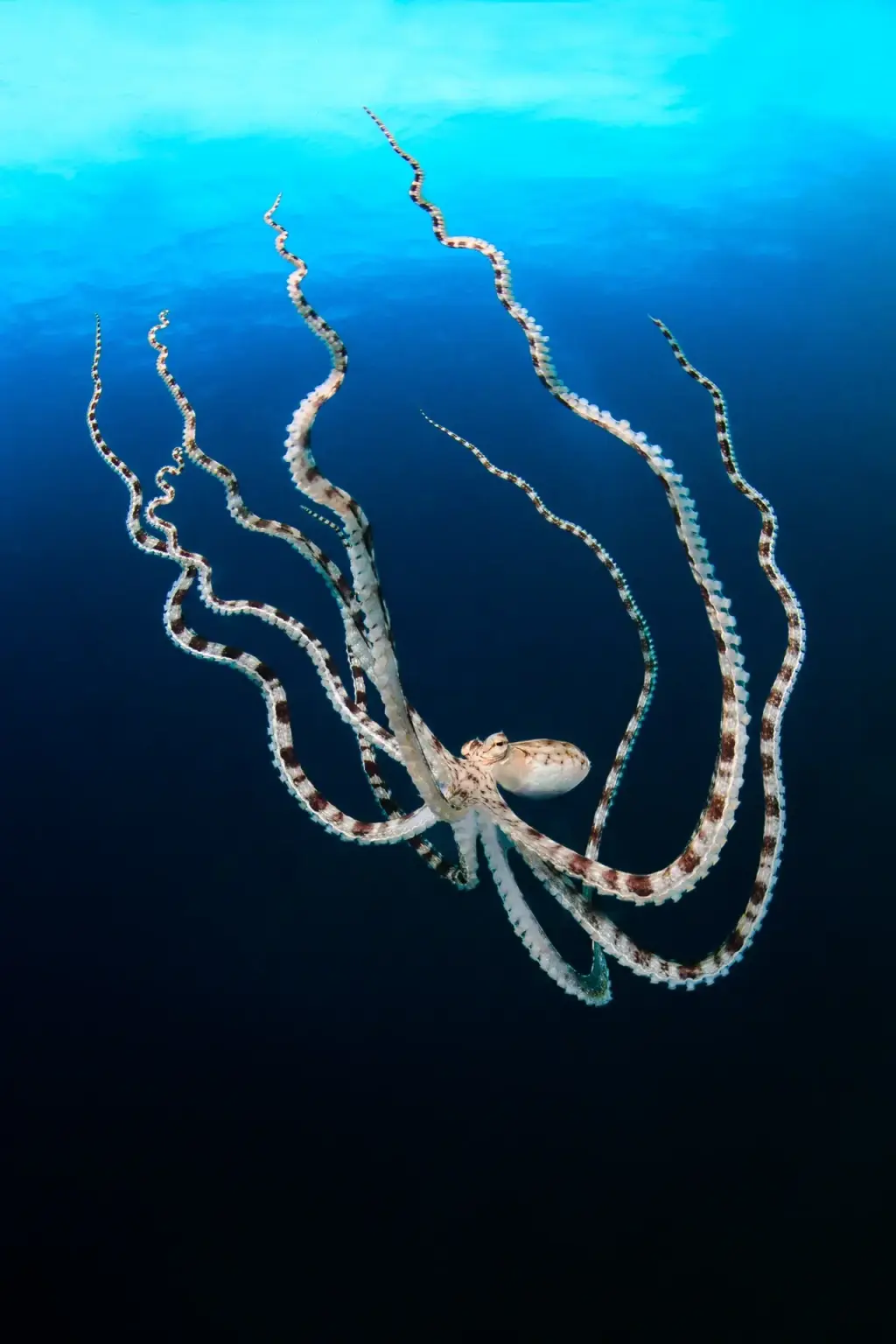
Image by Bernard Ravener
Lembeh Strait in Indonesia is often thought of as the premier muck diving destination and if luck is on your side it’s here where you can expect to have encounters with the enigmatic mimic octopus. Their uncanny ability to imitate more than ten different animals including lionfish and flatfish is unique to this most bizarre and advanced mollusc.
In Bali and North Sulawesi the octopus opportunist has the chance to spot all manner of critters including the fascinating coconut octopus, named for the behaviour it exhibits when using coconut shells to conceal itself from would be predators. When they’re not displaying this clever trick they’re often buried in the sand exposing only their eyes.
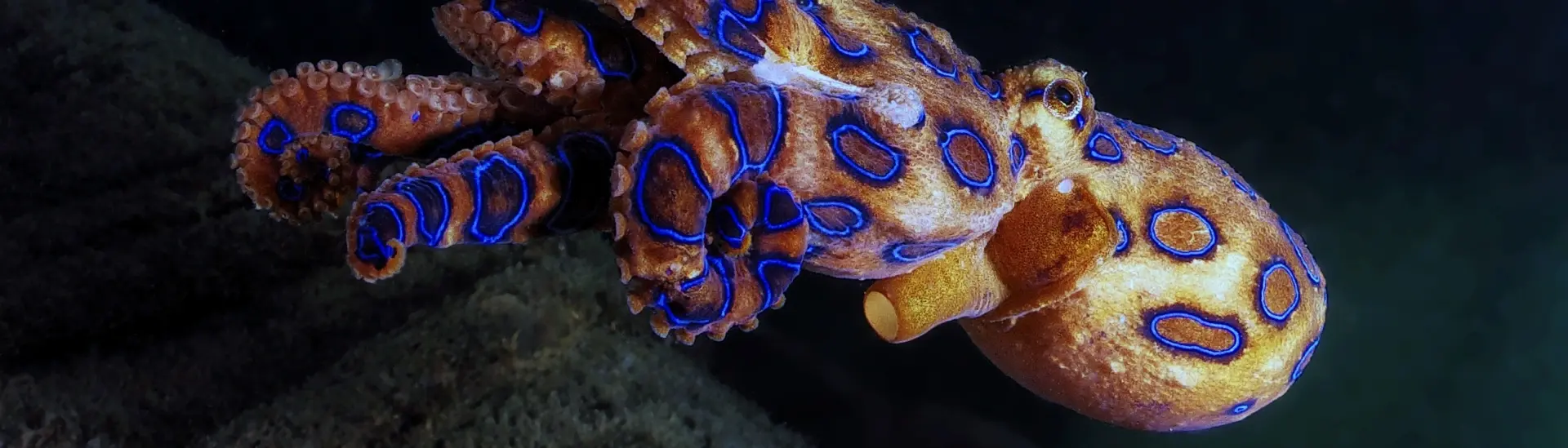
A visit to the Philippines to Anilao or Bohol should also be on the bucket list if like me, the octopus ranks highly on your favourite species list. It’s possible to see the tiny but highly venomous blue ringed octopus which technically has enough venom to kill upwards of ten grown men! All octopodes have venom but the recorded number of total deaths worldwide from the blue ringed (the most venomous) is thought to be no more than a dozen or so. When approached sensibly and with caution they do not pose a significant threat to a diver.
The octopuses (not octopi) ability to solve problems and puzzles is the subject of scientific research and ongoing questions about their intelligence. Their lifespan can be less than 6 months, with the largest of species - the giant pacific octopus - living the longest at just 3-5 years in the wild. They are also the most devoted mothers on earth, with mother’s starving themselves and sacrificing their own lives to protect and nurture their eggs. Males are rather less impressive, and are thought by some to lose much of their memory after mating.

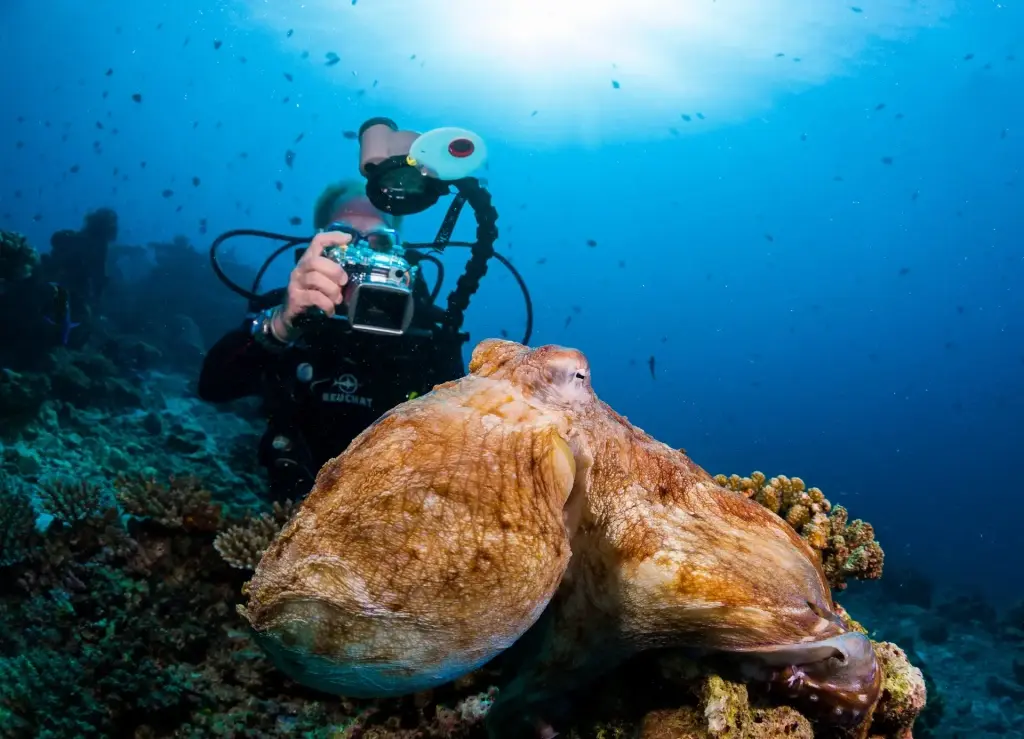
With a central brain and large numbers of neurons within the skin acting as ‘mini brains’; controlling each arm independently, three hearts, blue blood and the ability to camouflage by changing both colour and texture it’s easy to see how this seemingly alien creature captures the imagination. As a recreational diver and general enthusiast, I always keep my eyes peeled whenever I’m in octopus territory. A sighting no matter how fleeting it may be always makes me smile.
What’s your favourite marine creature?
Enquire about this blog
Speak to an expert. Call 01353 659999 Send Enquiry