





Muck Diving
Search for masters of camouflage hiding in unlikely places, or in plain sight, on an extraordinary muck diving adventure.

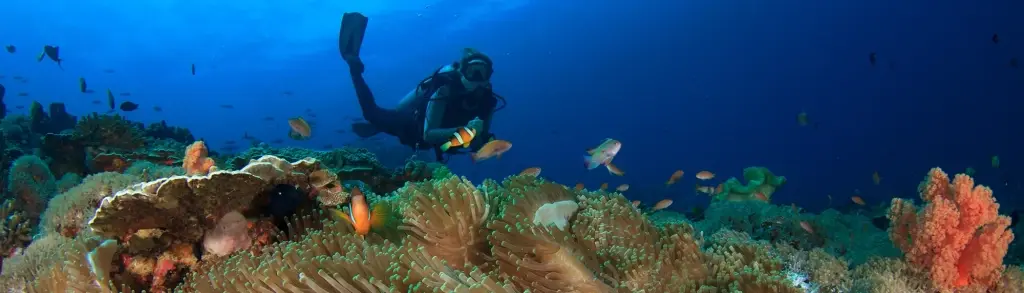
Are you fascinated by smaller marine life? A cornucopia of weird and wonderful creatures awaits you, including pygmy seahorses, nudibranches, sea moths and mantis shrimps.
Muck diving may be an unusual term, but it has become hugely popular with divers and keen underwater photographers. It refers to diving those environments, often between the beautiful coral reefs, that are known for a high number of smaller, more unusual species. A descent onto a muck diving site marks the beginning of a wonderful treasure hunt, where all manner of surprises await.
The finest muck diving sites are in the Coral Triangle, encompassing much of South-east Asia and the western Pacific. Their location typically ensures wonderful reef dives are nearby too, giving a varied and fascinating combination to your diving holiday. Read on to discover some of the best opportunities to enjoy this fascinating style of diving.
Why We Love Muck Diving
I just love a good muck dive, and the opportunity to search for really special marine species that you just don’t see on a coral reef dive. It is so addictive. Some of my favourite species to find on a muck dive include mimic octopus, flamboyant cuttlefish and perfectly camouflaged frogfish, but the list of possible encounters is almost endless. With the help of superb local guides, surprising and beautiful finds await!
Phil, RegalDive
Muck Diving
Send Enquiry Speak to an expert. Call 01353 659999
Highlights
- Dive Lembeh Strait, dubbed the engine room of evolution
- Explore Anilao, the Philippines’ nudibranch capital
- Go critter crazy in the Dauin marine sanctuary
- Marvel at magical marine life in Ambon
About Muck Diving
What is Muck Diving?
Muck diving refers to exploring dive sites that may look unremarkable at first glance—often made up of sand, silt, rubble, and the occasional coral patch—but are home to a spectacular array of unusual and highly sought-after marine life. These unique environments are a haven for rare and cryptic species, many of which are masters of camouflage.
Favoured by underwater photographers and marine life enthusiasts, muck diving hotspots are typically found in regions with rich biodiversity, such as Indonesia and the Philippines. Locations like the Lembeh Strait—often called the "engine room of evolution"—as well as Bali, Ambon, Anilao, and Dumaguete offer incredible opportunities to discover rare critters alongside vibrant coral reefs.
Why Go Muck Diving?
While it might not offer the dramatic coral landscapes or pelagic encounters of other dives, muck diving delivers an entirely different kind of thrill. It’s often described as an underwater treasure hunt, where patient divers are rewarded with extraordinary sightings of bizarre and beautiful marine species.
For underwater photographers, muck diving is a source of numerous great subjects to focus on. Many of the creatures found in these habitats are slow-moving or stationary, offering time to frame the perfect shot. Unlike the fleeting moments of photographing fast-moving reef fish or large marine animals, muck diving allows for a more deliberate and rewarding approach.
Beyond the photography appeal, muck diving is also a fantastic way to deepen your understanding of marine biology. The diversity and strangeness of life on these dive sites offers fascinating insights into adaptation, camouflage, and evolutionary quirks.
Where are the Best Places to Go Muck Diving?
While muck diving can be enjoyed in several regions, a few standout destinations consistently offer world-class critter encounters, experienced dive guides, and great infrastructure. Here are some of the best places to experience the magic of muck diving:
The Lembeh Strait, Indonesia
Often hailed as the world capital of muck diving, the Lembeh Strait is famous for its staggering biodiversity and density of rare species. Located off North Sulawesi, this narrow stretch of water is home to countless frogfish, flamboyant cuttlefish, mimic octopuses, nudibranchs, pipefish, and more.
The dark volcanic sand provides the perfect backdrop for spotting camouflaged critters, making it a favourite destination for macro photographers. The diving here is relaxed and focused on going slow—perfect for spotting elusive life.
Many divers choose to combine Lembeh with nearby Bunaken National Park, which offers vibrant coral walls and excellent reef diving, creating a varied and rewarding dive itinerary. The less visited Bangka Islands are also nearby too.
Dauin Marine Sanctuary, Philippines
Dauin, on the southern coast of Negros Island, is one of the Philippines’ top diving destinations. Its volcanic sand slopes are home to a wide variety of rare species, including ornate ghost pipefish, blue-ringed octopuses, various frogfish, and flamboyant cuttlefish.
The Dauin Marine Sanctuary itself is a protected area where critter life thrives, and dive resorts in the region offer expert guides who know exactly where to find the rarest species.
Dauin is also the perfect base for trips to Apo Island, a short boat ride away. Here, colourful coral gardens, dramatic reef walls, and frequent sightings of sea turtles provide an excellent contrast to the muck diving sites closer to shore.
Anilao, Philippines
Just a few hours' drive from Manila, Anilao is a macro lover’s paradise and a popular escape for divers and photographers. Despite its accessibility, Anilao boasts an astonishing variety of muck diving sites where you can encounter everything from hairy frogfish and nudibranchs, to bobbit worms and rare crustaceans.
Anilao is also known for its clear waters, making it a superb place to photograph small subjects in excellent visibility. Night dives here are especially productive, revealing a whole new cast of characters, while blackwater diving is also offered.
With many dive resorts catering specifically to macro photographers, Anilao is both convenient and rewarding for muck diving enthusiasts. Anilao can combine well with other locations in the Philippines, or certain Pacific destinations, notably Truk and Palau.
Ambon, Indonesia
Ambon, in the Maluku Islands of eastern Indonesia, offers a fantastic mix of muck and reef diving. The south coast features excellent coral sites, while Ambon Bay is where muck diving truly shines.
The bay’s sheltered slopes and piers are home to an incredible array of macro life, including rhinopias, frogfish, harlequin shrimp, and the rare psychedelic frogfish—a species discovered only in Ambon. The diversity and density of critters here rival more famous sites, but with fewer crowds.
Ambon is also a common stop on longer liveaboard routes through the Banda Sea, making it a great addition to a more extensive diving itinerary in eastern Indonesia.
Iconic Muck Diving Species
Muck diving unveils a world of weird and wonderful marine life, many of which are rarely seen on traditional reef dives. From highly intelligent octopuses to exotic nudibranchs, here are some of the most iconic—and bizarre—species you might encounter:
Mimic Octopus (Thaumoctopus mimicus)
First described in 1998, the mimic octopus (Thaumoctopus mimicus) is one of the ocean’s most captivating creatures. Found in sandy, shallow muck sites across Indonesia and the Philippines, this ingenious cephalopod can contort its body and alter its colour and texture to impersonate other marine animals—including lionfish, sea snakes, flatfish, jellyfish and even crinoids.
Its mimicry serves both as a defence mechanism and a hunting tactic, allowing it to avoid predators and approach prey undetected. The mimic octopus is a firm favourite among divers and underwater photographers, particularly in Lembeh, Ambon and north Sulawesi.
Wunderpus (Wunderpus photogenicus)
Closely related to the mimic octopus, the wunderpus (Wunderpus photogenicus) is another star of the muck diving world. Recognised by its rusty red and white patterning, this beautifully named species is more than just photogenic—it’s elusive, elegant, and often active during twilight hours.
The wunderpus is best encountered in sandy-bottom habitats with good visibility, and is frequently spotted in Lembeh Strait, Ambon, and other muck diving hotspots in Indonesia.
Blue-Ringed Octopus (Hapalochlaena spp.)
Despite its tiny size, the blue-ringed octopus (Hapalochlaena spp.) commands serious attention. These small, cryptic octopuses are typically well-camouflaged until threatened, when they flash their iconic iridescent blue rings as a warning. Found in various shallow muck environments, they are both mesmerising and dangerous—their venom is potent enough to be fatal to humans.
Divers often seek them out for their stunning appearance, and while sightings are never guaranteed, they are occasionally found in Anilao, Dauin, and Lembeh by eagle-eyed guides.
Flamboyant Cuttlefish (Metasepia pfefferi)
Another firm favourite among underwater photographers is the flamboyant cuttlefish (Metasepia pfefferi). Unlike other cuttlefish, it walks along the seafloor using specialised arms and fin-like structures, all while pulsing brilliant colours of yellow, pink, white, and black.
Though small, this species has a big personality and is frequently encountered in sites around Ambon, Lembeh and Dauin. Its vibrant display is not just for show—it’s a warning, as this cuttlefish contains venom.
Pygmy Seahorses (Hippocampus spp.)
Tiny and incredibly well-camouflaged, pygmy seahorses (Hippocampus spp.) are among the most treasured sightings in muck diving. Measuring under two centimetres, these miniature marvels live in perfect mimicry with their hosts—often gorgonian sea fans—making them notoriously difficult to spot.
There are currently seven recognised species, including the popular bargibanti pygmy seahorse (Hippocampus bargibanti), Denise’s pygmy seahorse (Hippocampus denise), and the pontoh pygmy seahorse (Hippocampus pontohi). The best chances of spotting one are with a trained guide in sites such as Lembeh, Wakatobi, and Dauin.
Frogfish (Antennarius spp.)
Few creatures are as delightfully odd as the frogfish (Antennarius spp.). These ambush predators come in all shapes, sizes, and colours—and are the masters of camouflage. They can resemble sponges, algae, or even bits of debris, lying perfectly still while using a specialised lure to tempt prey within striking distance.
With a lightning-fast strike—measured at just six milliseconds—frogfish have one of the quickest feeding actions in the animal kingdom. Notable species include the giant frogfish (Antennarius commerson), clown or warty frogfish (Antennarius maculatus), and the painted frogfish (Antennarius pictus). Sightings are common in Lembeh, Ambon, and Dumaguete.
Pipefish (Syngnathidae family)
Slender and graceful, pipefish are close relatives of seahorses and are a staple of many muck diving sites. Their elongated bodies and subtle movements make them easy to overlook, but once spotted, their delicate features and curious behaviour are a joy to observe.
Species like the robust ghost pipefish (Solenostomus cyanopterus) and ornate ghost pipefish (Solenostomus paradoxus) are particularly sought after. These fish often mimic their surroundings—seagrass, feather stars, or debris—and are frequently encountered in places like Anilao, Lembeh, and Dauin.
Nudibranchs (Nudibranchia order)
Often called “sea slugs,” nudibranchs are among the most colourful and varied creatures in the ocean. Found in almost every muck diving location, their vibrant colours and flamboyant frills belie a diverse array of forms, sizes, and behaviours.
From the spectacular Spanish dancer (Hexabranchus sanguineus) to the tiny Shaun the Sheep nudibranch (Costasiella kuroshimae), these animals are macrophotography favourites. Muck diving hotspots like Lembeh and Anilao are known for an exceptional diversity of nudibranch species.
Itineraries for Muck Diving

Indonesia
Bunaken & Lembeh Diving
Dive two of Indonesia’s most famous diving locations on one fabulous twin-centre itinerary. Bunaken & Lembeh await!

Philippines
Muck and Magic with Saeed Rashid
Enjoy superb diving in the Philippines on this unique diving holiday led by underwater photographer Saeed Rashid.

Indonesia
Raja Ampat - Banda Sea - Ambon
Embark on an epic diving journey through some of Indonesia's most biodiverse regions: Raja Ampat, Banda Sea, and Ambon on this…

Indonesia
East Flores / Alor Island
Explore this seldom visited region of the Indonesian archipelago by liveaboard to take in the full range of its diving riches.
Gallery


Related Locations

Derawan, East Kalimantan
The Derawan Islands are in the province of East Kalimantan in Indonesia. This area offers that rare combination of big and small…

Bali
Bali is blessed with a range of dive sites to explore, and is a great option for those looking to get a taste of Indonesia.

Manado, North Sulawesi
The dominating volcanic landscape creates a dramatic backdrop to the world class diving available in North Sulawesi.

Anilao
Anilao sits in the heart of the Philippines best-loved diving in the Coral Triangle, which for many divers is the muck diving…

Dumaguete & Dauin
Dumaguete is situated on the south eastern tip of Negros, an area famed for macro diving and the marine sanctuary of Apo Island.
Enquire about Muck Diving
Speak to an expert. Call 01353 659999 Send Enquiry